
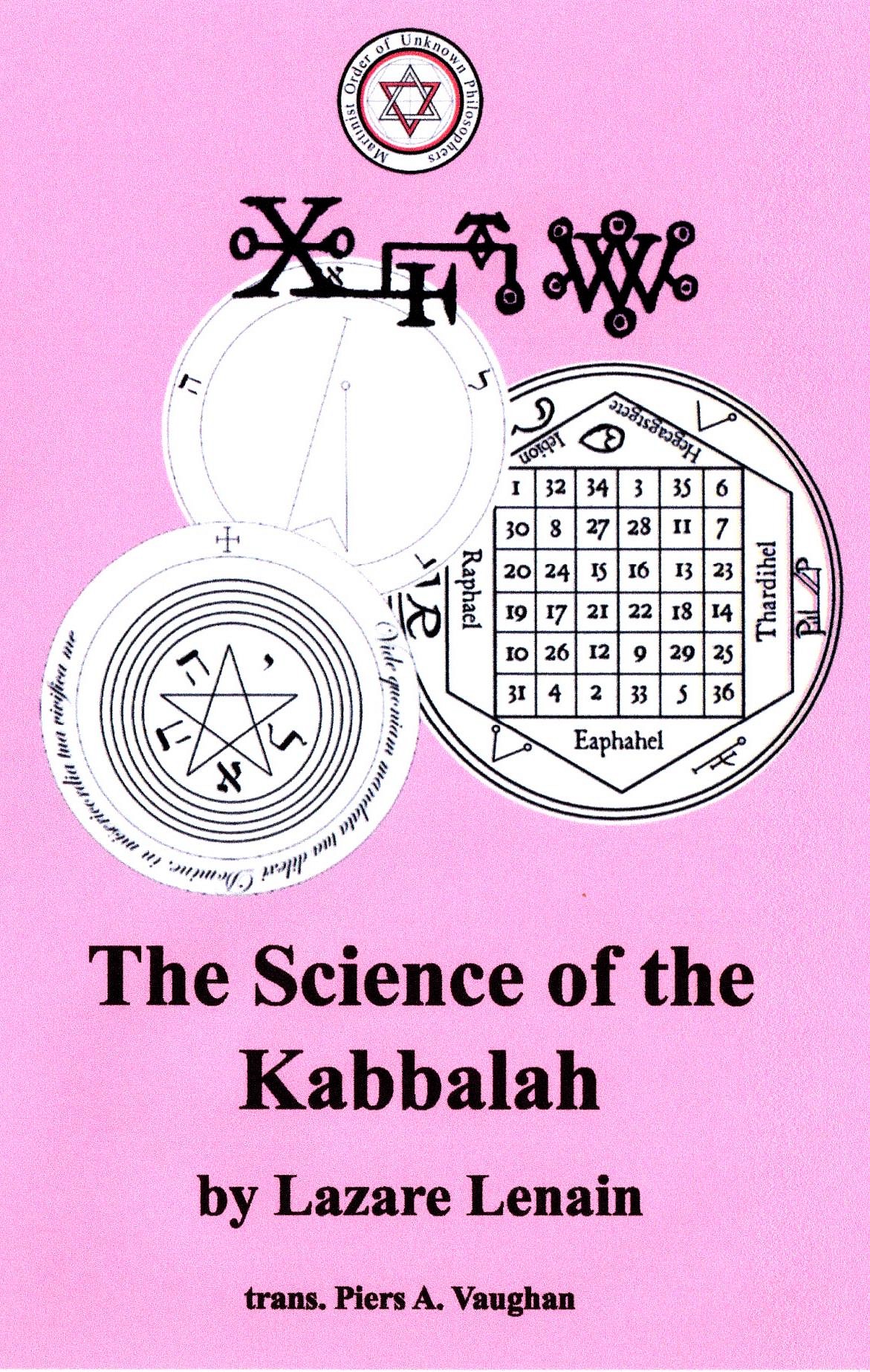
I am pleased to announce my latest translation: “The Science of the Kabbalah, or the Art of Knowing the Good Geniuses” by Lazare Lenain. Curiously, this book has been translated into a number of languages, including Italian and Russian, but never into English – at least in the public domain. This important book, published in 1823, is a key introduction to the Shemhamphorash, or 72 Angels or Geniuses of the Book of Exodus. This book was considered important enough by Papus to have it reprinted in 1909 with his own Preface (included). Indeed, the book was influential on the systems both of Martinism and the Hermetic Order of the Golden Dawn, with Papus and McGregor Mathers drawing elements from it for their particular Shemhamphorash rituals.
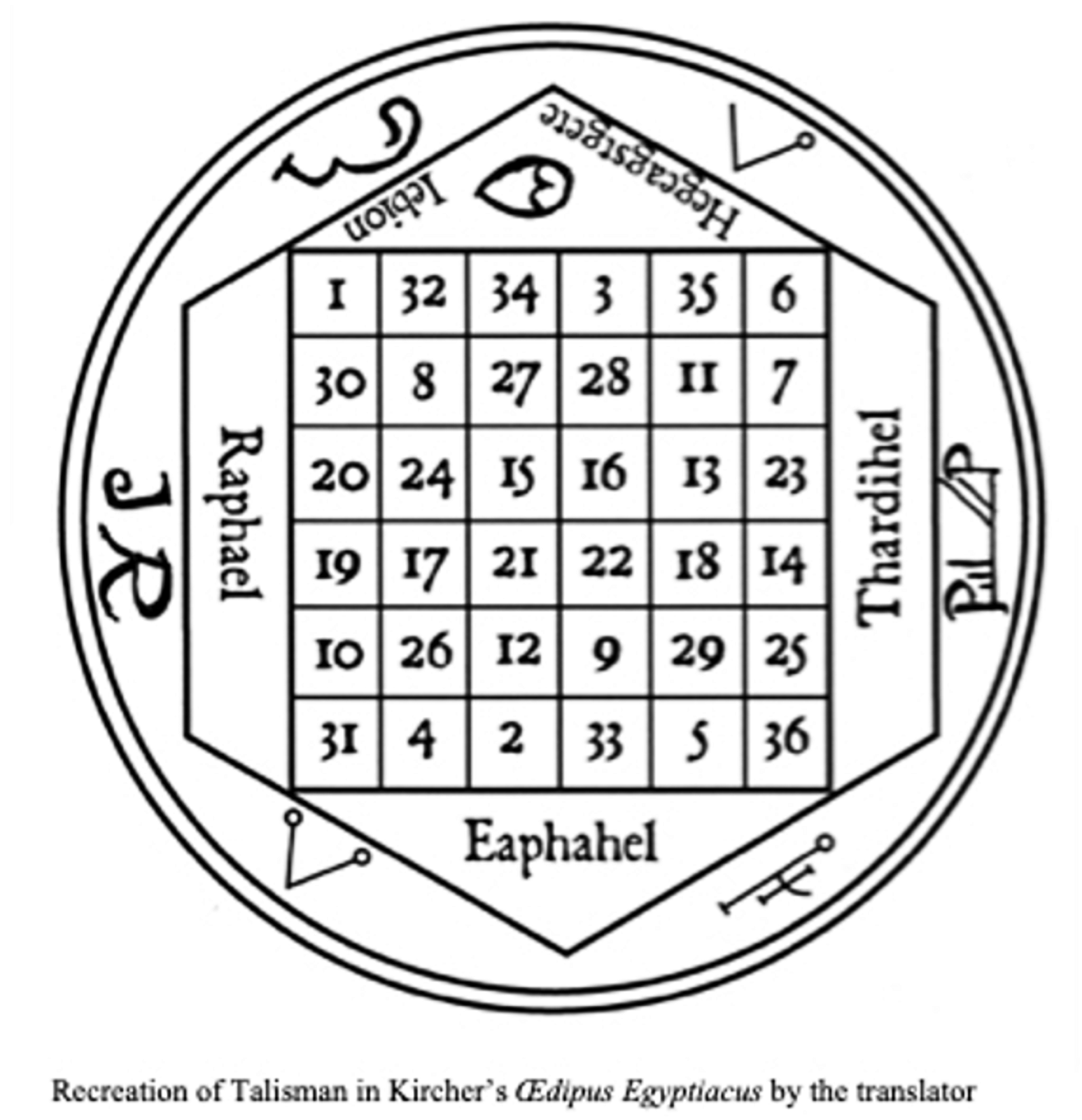
The substance of the book concerns the attributes of God and a general introduction to the idea of the origin of the Divine Names, with a brief explanation of the Hebrew letters. This leads us to an introduction to the 72 Divine Names of God and their importance, as well as the notion of the Names having individual power in their own right, personified as Geniuses or Angels. A series of Tables then allows the reader to work out their personal Geniuses which govern the body, mind and morality. The major part of the book is a detailed explanation of each of the 72 Geniuses and their attributes. This section was copied wholesale by Robert Ambelain when he wrote his seminal book La Kabbale Pratique. Following a review of the Geniuses of the ‘third class’, the elemental ones, there follow a series of lists of correspondences ranging from incenses, Kabbalistic astrological associations, precious stones, metals, colors and animals. The books ends somewhat abruptly with an etymology of the name Jehovah (or Yod Heh Vav Heh).
Curiously , despite Lenain’s apparent promise in his Preface to show the reader how to use all this information in rituals, in reality his work – apart from a hint when he discusses the ‘Mysterious Seal of the Sun’ – only provides the method of identifying one’s personal Geniuses. It would appear that he intended to go into far more detail, and provide seals or sigils to be used in the operations of communicating with these Geniuses, once they had been identified; but unfortunately the follow-up book was never forthcoming. This of course opened the way for both the Golden Dawn and the Martinist Order to create their own!
To make up to some extent for this shortcoming, the translator has provided a number of Appendices intended to address some of these shortfalls. While not providing a complete Shemhamphorash ritual (I will only ever publish something which has already appeared with an ISBN number or equivalent, to avoid any accusation of giving away anything I have taken a vow to keep hidden, for I believe in integrity. That said, libraries and things with ISBN numbers includes just about everything concerning the Rectified Rite, Elus Cohen and mainstream Martinism, so that really only refers to other Orders!), the information – or at least the tools to create them – which I have provided in the Appendices is available in libraries or books. I specifically refer to Appendices D, E and F.
In Appendix D the famous seals in Manuscript 2495 in the Bibliothèque de l’Arsenal, Paris have been reproduced. These were consulted by both McGregor Mathers and Ambelain at different times, and their use incorporated into the Golden Dawn version and, by Ambelain, in the working of the Martinist Shemhamphorash. However, Ambelain later relented, and there are many French practitioners who also avoid their use, believing them to be adverse.
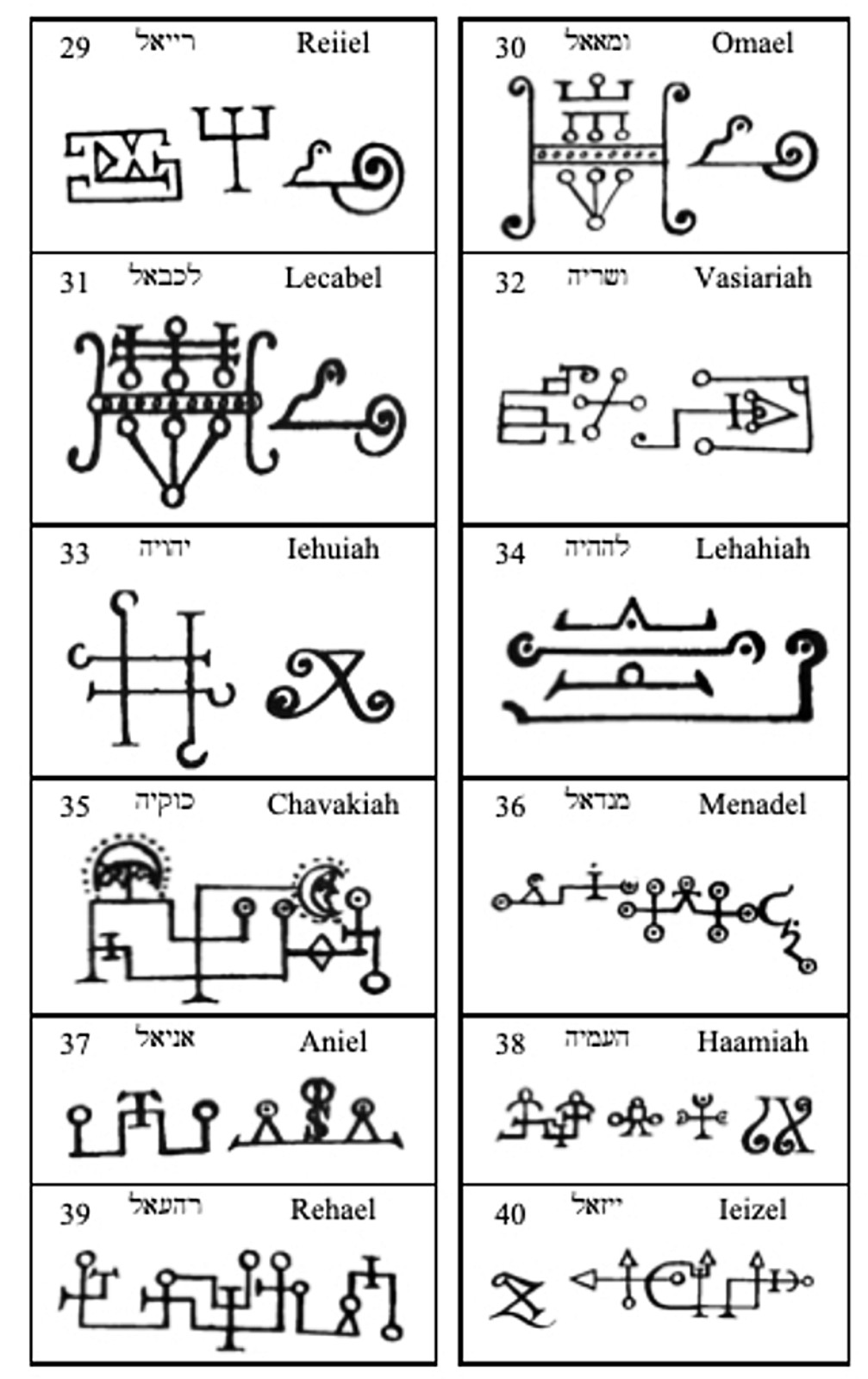
Ex. of Arsenal Ms 2495 sigils
Therefore the translator created Appendices E and F as alternatives to the Arsenal seals. Appendix E uses the Golden Dawn Rosicrucian Rose. Normally this system uses a double circle containing the name in Hebrew around the Arsenal sigil, but here the sigil has been replaced by the gentler approach of drawing the angelic name upon the Rose using the approach outlined in any decent book on the Golden Dawn. Finally, Appendix F utilizes the descriptions and drawings of Eliphas Lévi from his (at one time!) private letter to his disciple Baron Spedalieri, entitled Clefs Majeures et Clavicules de Salomon. Most of the images are either in shorthand, incomplete or even one-line written descriptions: clearly they were intended as an aide memoire to accompany oral instructions. Therefore I decided to recreate them as complete seals for the 72 Geniuses (even if their initial focus was on the Tarot). For this I had invaluable guidance from Bro. Mathieu Ravignat, a Canadian professional researcher who had spent decades in these traditions, particularly in France and Belgium, and who was able to provide me with insights and education passed to him by his teachers. For this I am immensely grateful.
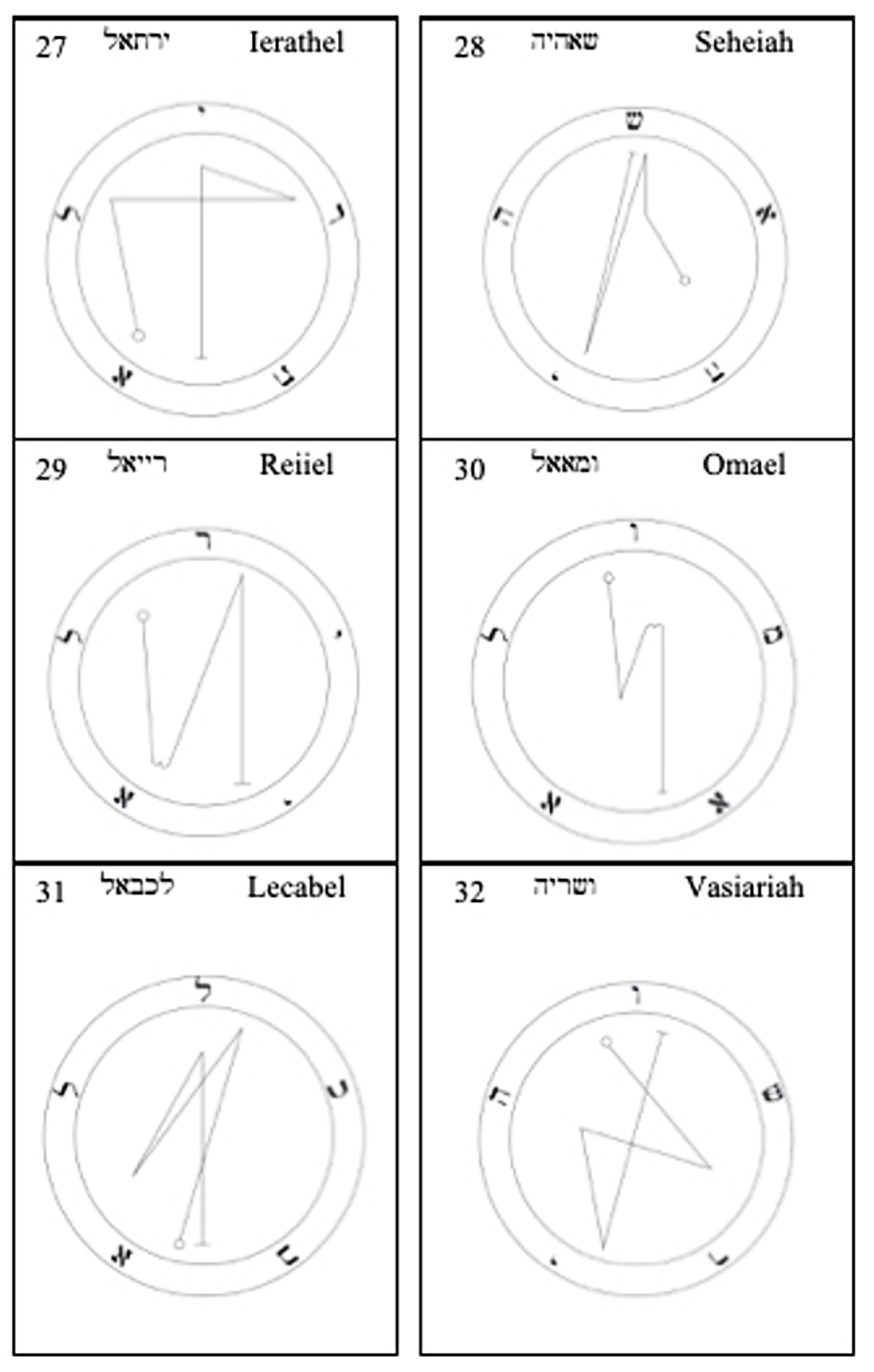
Ex. of Rosicrucian seals
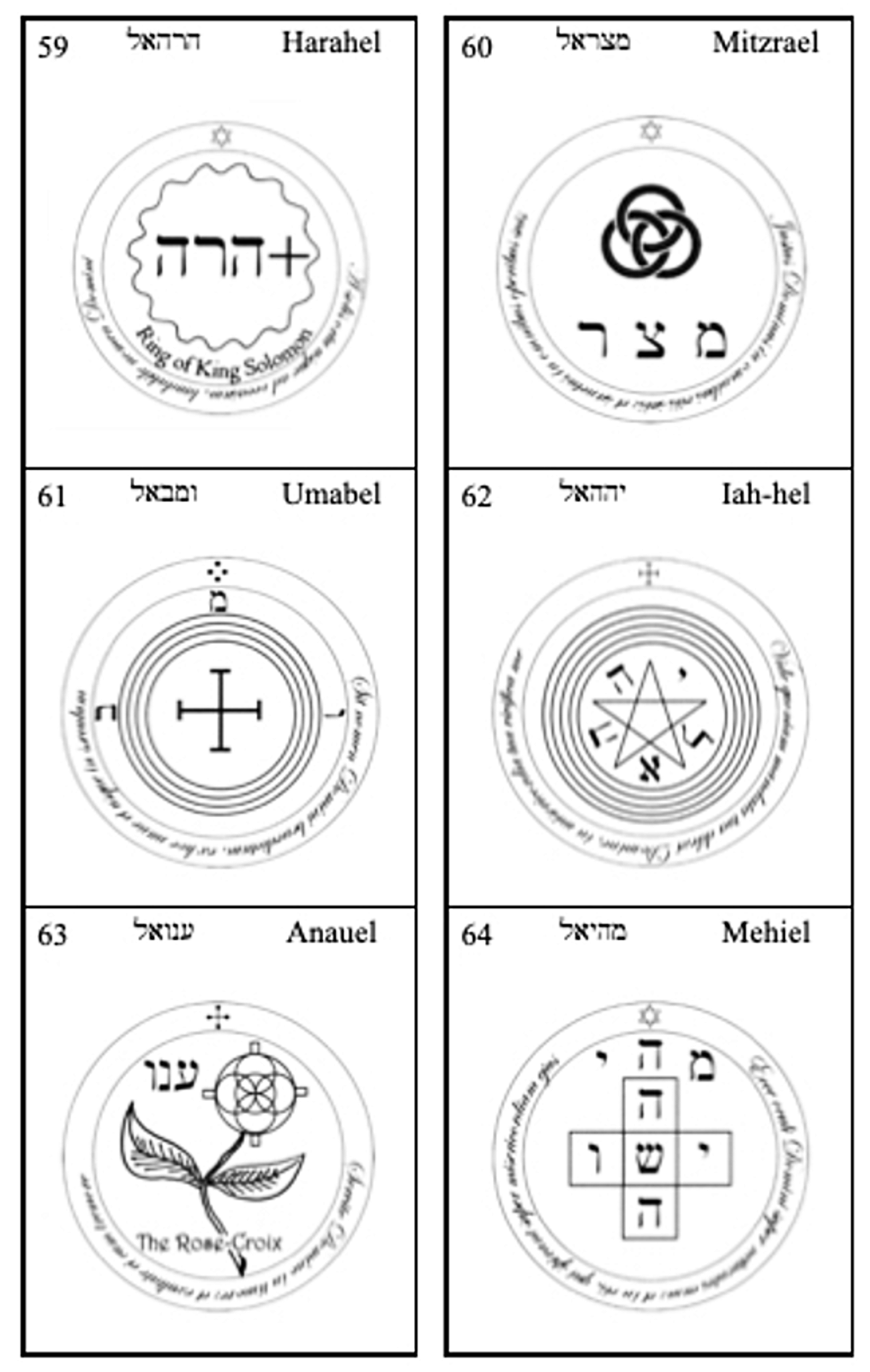
Ex. of Lévi realized seals
As a final aside, having set up the book with my printers, I placed the order for my proof copy and for the Library of Congress on June 9. I am still waiting (the date being July 6!). Meanwhile, it appeared on amazon.com and a friend of mine ordered a copy late last week which arrived today! Go figure! However, when images are reproduced in small version to allow an easier overall view of the systems, the details tend to become a little blurry or faint. So for those who wish to avail themselves of the seals for practical work, I will be providing much larger versions of Appendices E and F here, in PDF but with no restrictions as to copyright or anything else. Please feel free to download and use or amend for your own purposes. I am merely trying to save you time reinventing the wheel! In this post you’ll find the Rosicrucian Seals (click on the link at the bottom of this page). I’ll try to get the Lévi ones out in the next post.
In the meantime, the book is now available on amazon.com and there is also a link of the on the Books Published page.
Rosicrucian Sigils of the 72 Geniuses
