
Oh, the horror!
The first issue I learned early on is that I am one of the few people who is active in the esoteric and Masonic world who can read French! Let’s just say this is quite an issue, since so many important books, rituals and commentaries are written in French, and probably because of the frankly surreal copyright laws in France, it can be next to impossible to get permission to translate anything. You normally have to wait until someone has been dead for at least 70 years, and hopefully left no offspring…
It also means that I have a long line outside my door asking for translations of rare books/manuscripts/rituals, who are under the impression that if they keep reminding me, I’ll get to their work sooner.
Then there’s the language itself.
Sometimes it can be so vague (unlike German, which is, of course, military in its preciseness) it’s almost impossible to decide what all the pronouns are referring to. I have written whole paragraphs only to find the ‘it’ is actually something completely different to what I assumed it was.
And don’t get me started on sentence length. In my experience, only Latin philosophers can vie with French philosophers and theosophists for length of arguments.
You wouldn’t believe how many tenses for verbs there are in French. Indeed, I saw one tense die before my very eyes. When I was at school (a long, long time ago) there was something sinisterly called the Passé Simple, or Simple Past Tense. Simple it was not!
For those of you with a smattering of French, remember the verb to give, donner (think of donation). The Present Tense was gentle enough:
je donne, tu donnes, il donne, nous donnons, vous donnez, Ils donnent.
Easy, right? Now look at the Passé Simple:
je donnai, tu donnas, il donna, nous donnâmes, vous donnâtes, ils donnèrent.
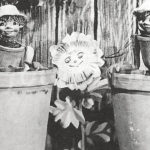
Ouch! This tense was only used when writing in the past. The spoken verb was different! Yes. If you said ‘I gave’, you wrote ‘I flobadob’ (who remembers Bill and Ben The Flowerpot Men?)…
Fortunately, even the French realized this made no sense, and nowadays the Passé Simple is dead. RIP. You write what you say.
More on trying to translate 18th, 19th and 20th Century French anon….
Fortunately, even the French realized this made no sense, and nowadays the Passé Simple is dead. RIP. You write what you say.
More on trying to translate 18th, 19th and 20th Century French anon….
