
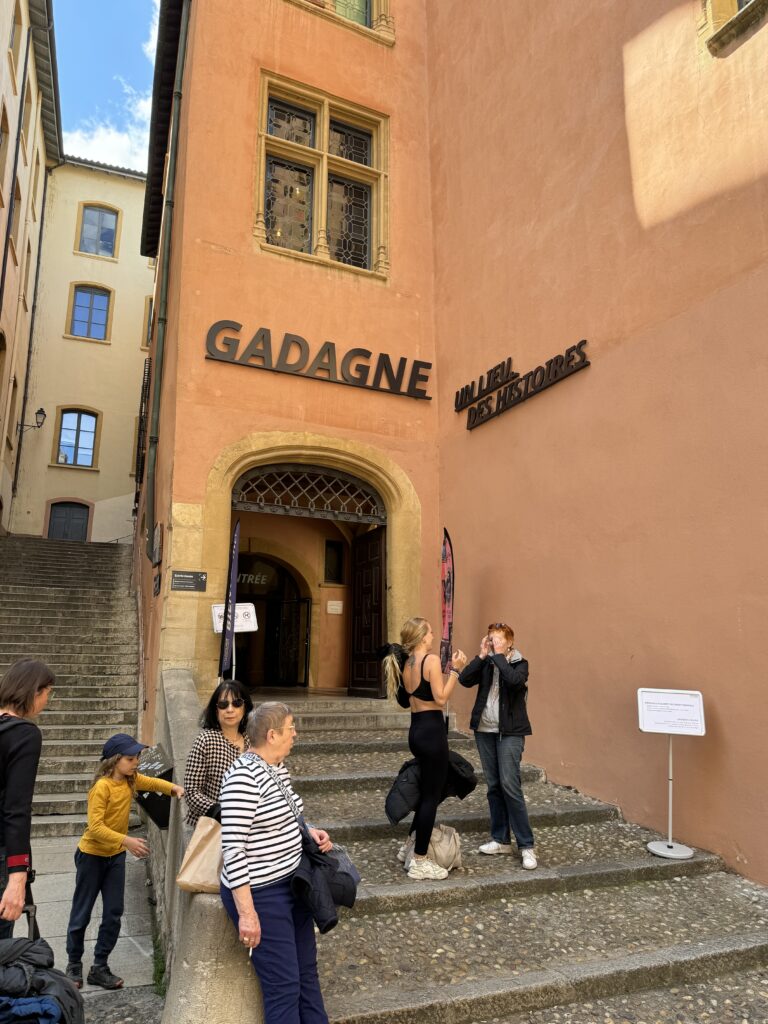
I am currently in Lyon, enjoying a tour of France which has taken in Occitania and Cathar sites, and now here, where I have followed in the footsteps of Jean-Baptist Willermoz, Joanny Bricaud and Constant Chevillon (of which more in a later blog). I also had the opportunity to establish contact with Mme. Cécile Gotterand, Director of Collections and her colleague Mme. Rebecca Duffeix at the Musée Gadagne in the old town of Lyon. While the museum predominantly exhibit items from the history of puppetry in the region (yes, we’re talking about Guignol, the beloved puppet who became Punch in the English traditions, and not Grand Guignol, you sadists!), a chance conversation with a female Mason last year led me to explore this lead. There was a rumor that in storage were aprons from the time of Jean-Baptiste Willermoz, including, possibly one worn by him!
Last year I wrote to a contact at the Lyon Administration, but never heard back, so I assumed I had fallen into the vortex of political indifference! However, I tried again this year and was surprised to receive an apology from the person, together with a list of contacts, whom he had already alerted. The result was a delightful meeting last Friday when I was taken into the bowels of the museum and shown their collection of 18th and early 19th Century Masonic aprons. That part of the visit I will save for another blog.
However, just as I was about to leave Mme. Gotterand reappeared with an item which officially blew my mind!
For context, there is an image which I have produced below which has long been accepted as a portrait of J.-B. Willermoz. However, more recent scholarship has thrown this image into doubt (along with the ones of Martinès de Pasqually, one might add). This is, in fact, Jean Le Rond d’Alembert. I refer you to the writings of Dr. Oscar Alleyne as one example of this school of thought.

Back to the item!
It was a celebratory plaque for the founding of Loge la Bienfaisance in Aix in 1807. Now, this was after the Regime of Terror of the French Revolution, when the Scottish Rectified Rite was trying to pick up the pieces and re-establish the Rite in France, now that Napoleon was Emperor (1804 – 1814).
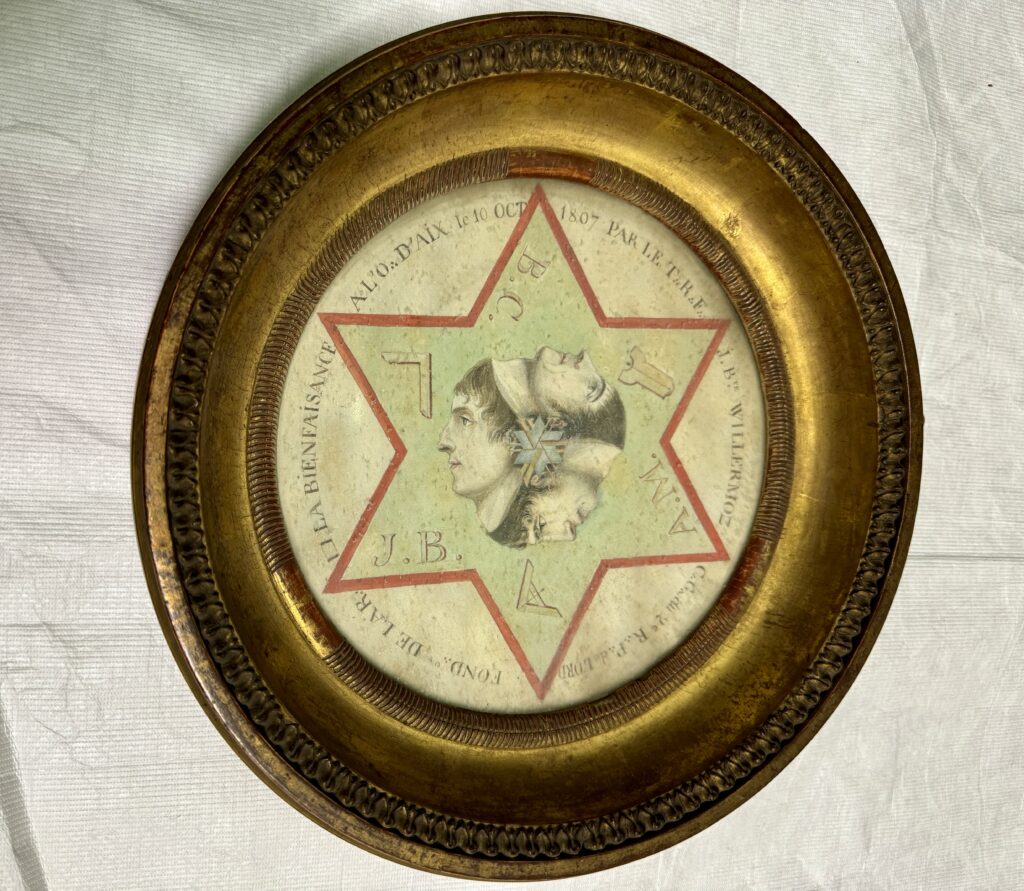
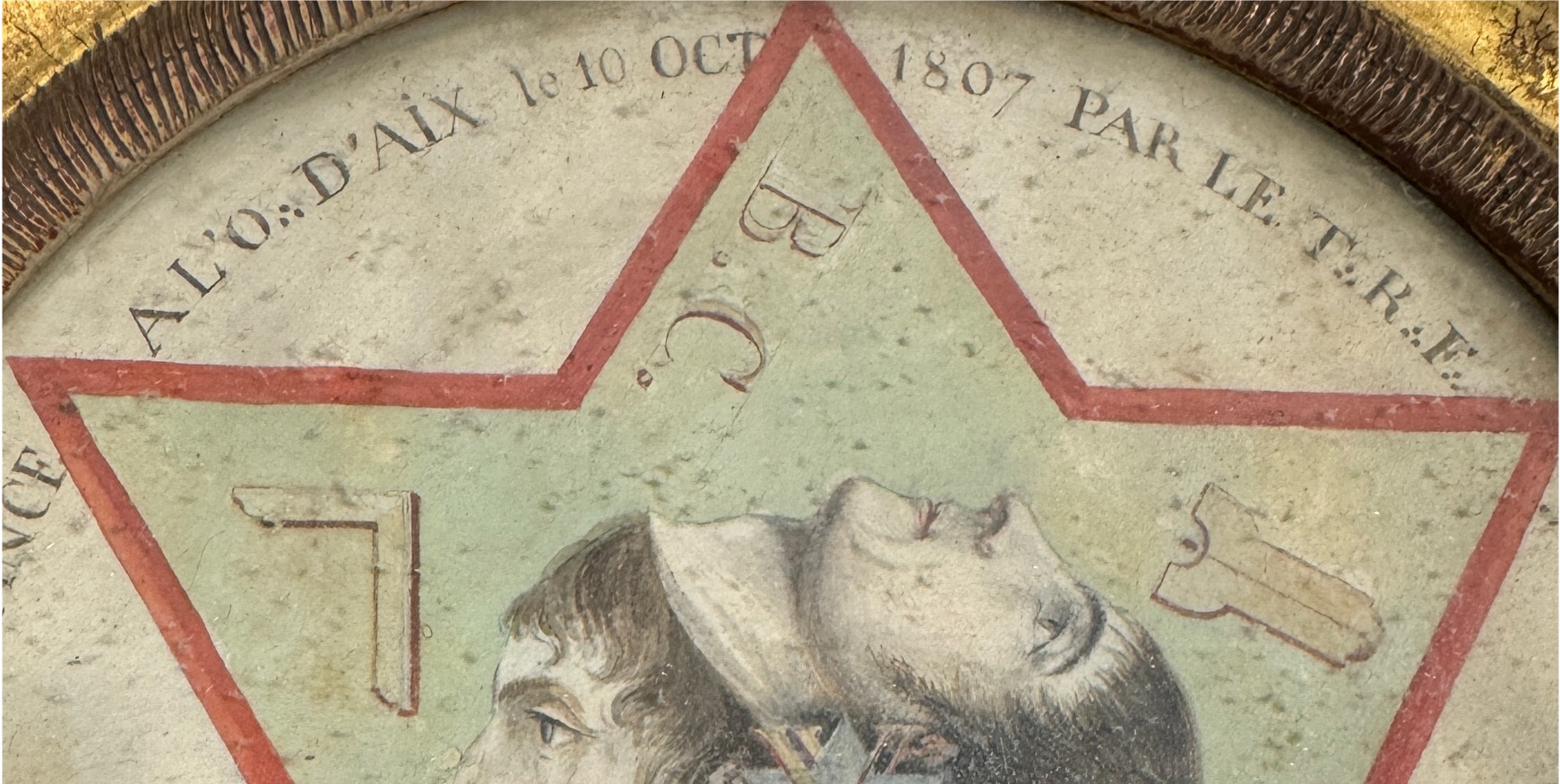
As you can see, this plaque is astonishing. Round the outer rim in ‘Masonic’ French (i.e words are abbreviated with triple dots), and as best I can interpret the abbreviations, it says:
“Foundation of the Rectified Lodge La Bienfaisance in the Orient of Aix, on 10th October 1807, by the Very Respectable Brother J. B. Willermoz, Grand Chancellor of the 2nd Reestablished(?) Province of the Order.” [anyone who looks at the border and has a better idea, please let me know!]
Now, according to Roger Dachez, Willermoz reluctantly became the patriarch of the Rectified Rite, furnishing the new lodges with rituals, and in June 1809 finally accepted the position of National Grand Master of the Order. In that same year he produced a final version of the Scottish Master of St. Andrew, with which he had been charged at the Convent of Wilhelmsbad: “after the great illness that I had suffered, and finding myself alone among those who has participated in this work…I dared to undertake to complete it” (“après la grande maladie que j’essuyai, me voyant seul de tous ceux qui avaient participé à bette outrage… j’osai entreprendre de le faire“).
However it was the middle part which grabbed my attention. There is an almost surreal portrait composed of three heads joined together. These were clearly the three founders of Loge la Bienfaisance being commemorated in this celebratory plaque. While we know from above that Willermoz was reluctant to take an active role in the new Lodges, the artist had fancifully attributed the tools of Master (Square), Senior Warden (Level) and Junior Warden (Plumb) to the three ‘founders’. Two of the other tools are by two faces with the initials B.C. and A.M. (and I leave to other scholars to research these other founders). But what interests me is the square by the face of one of these people, and to the right the initials J.B. Surely this must be none other than Jean-Baptiste Willermoz!
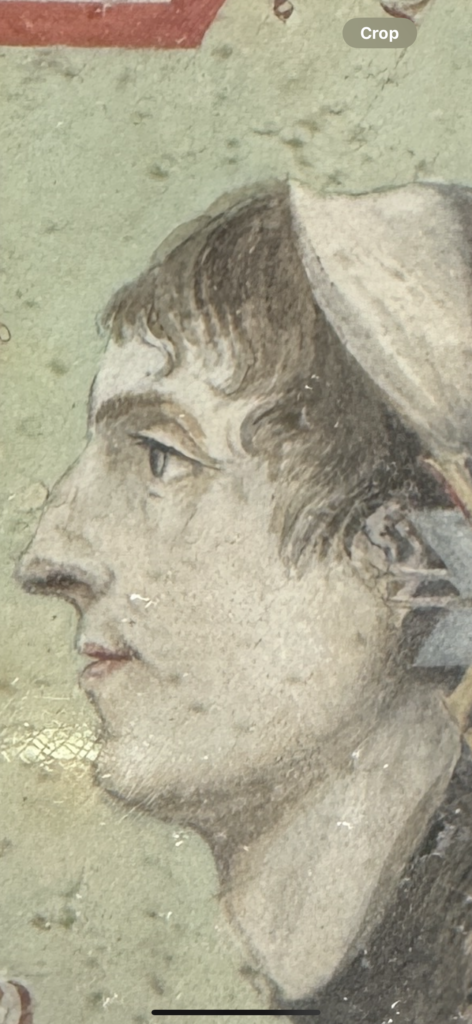
At this time he would have been 77 years old. Now, anyone knows that artists do well by painting flattering portraits, and even in our present time the ‘live’ photos of people on Facebook at contemporary events often show that their ‘official’ photograph was taken some years previously! Post-revolution, wigs were not worn, and we see him with a head of normal hair. The face indeed bears “the imprint of gentleness joined with dignity” as a contemporary described him.
Interestingly this face bears a striking resemblance to the younger Willermoz depicted in the famous engraving of him. The younger man may be wearing a wig, but there is a noticeable similarity between the two faces, which both hint at an aquiline nose, full cheeks, a gentle demeanor, and that enigmatic close-lipped smile.
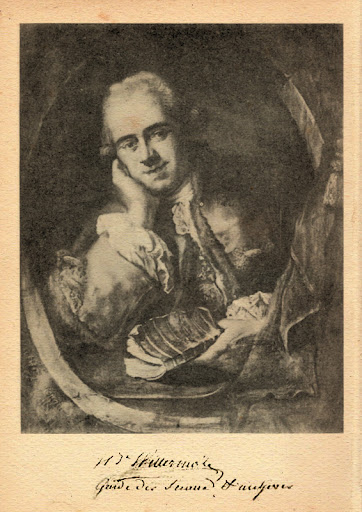
So, I propose to you, that following the doubt cast on the long-enjoyed but now discredited print of J.-B. Willermoz, we may finally be gazing upon the true face of the man who Roger Dachez describe as the “Patriarch of Illuminist and Mystical Masonry.”

Chancelier Grand du 2ème Ressort Provincial de l’Ordre = Grand Chancellor of the Order’s 2nd Provincial Jurisdiction
A.M. = Alexandre de Monspey
B.C. = Bacon de La Chevalerie
Bacon is probably the obvious choice based on his relationship with Willermoz as well as his direct involvement with orders. Monspey is just a guess based on membership of “La Bienfaisance” from 1780-1791, where he as the Visitor General of the provincial jurisdiction.
Chancelier Grand du 2ème Ressort Provincial de l’Order = Grand Chancellor of the Order’s 2nd Provincial Jurisdiction