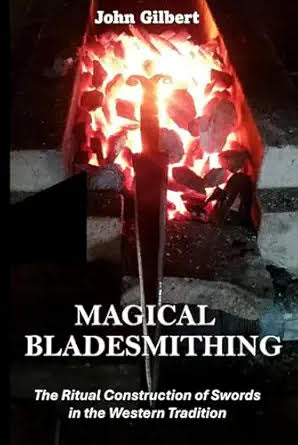
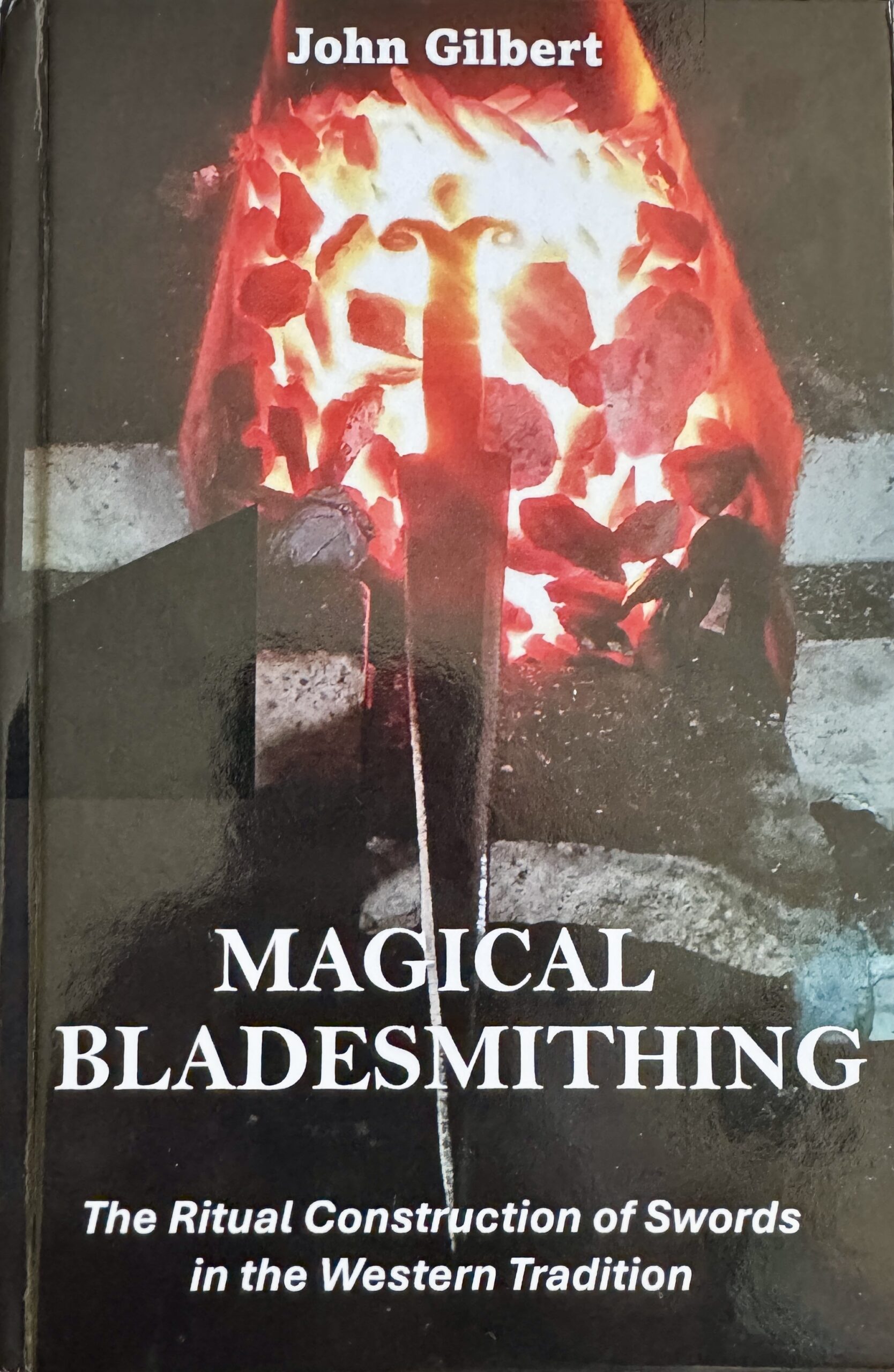
I’m delighted to announce the publication of John Gilbert’s latest book, Magical Bladesmithing.
Following the success of his previous book, Not As Above, Not As Below: How We Got The Emerald Tablet Wrong, the author shows us in this book both that he is far more than an armchair esotericist and theoretician. He shows us that he practices a particular form of alchemy: indeed, a specific form of metal alchemy which takes basic ore and raises it to a spiritual level by imbuing it with life. While the title might sound like a completely different subject, in fact the two books are allied, with this being the practical application of the central tenet of the Emerald Tablet, albeit in a very narrow and specific field.
His book covers the history of swords in various cultures which have taken on an importance far beyond that of a simple weapon. Reminding us that ceremonial swords – those used for ritualistic purposes – have been with us as long as those used in warfare, and that from earliest times they have been imbued with both mystical and anthropomorphic properties. While most of us have heard of such famed swords as Excalibur and Naegling, the author takes us on a tour of the Far East, Islam and early Europe to teach us about similarly famous swords, whose history blends with famous warriors, gods and kings. Even before the Iron Age, the ancient Egyptians created ritual daggers from meteorites, forever linking the object with the heavens, or ‘above’ with ‘below’.
While must of the ritual surrounding Western bladesmithing has been lost to us, perhaps because it was considered so secret it was passed form mouth to ear and never written down, in oriental texts we can find detailed descriptions of the process, which clearly demonstrate both a ritualistic and even religious aspect to the operations, which in many cases can be described as magical. Indeed, as well as dedicating the sword to a particular purpose, and even creating an enchanted object, some processes went so far as to imbue the sword with a life of its own, or to awaken the life already present within it. One is reminded of Michaelangelo’s comment which in its poetic version reads: “I saw the angel in the marble and carved until I set him free.” Esoteric doctrine tells us that everything contains life, whether it be animal , vegetable…or mineral.
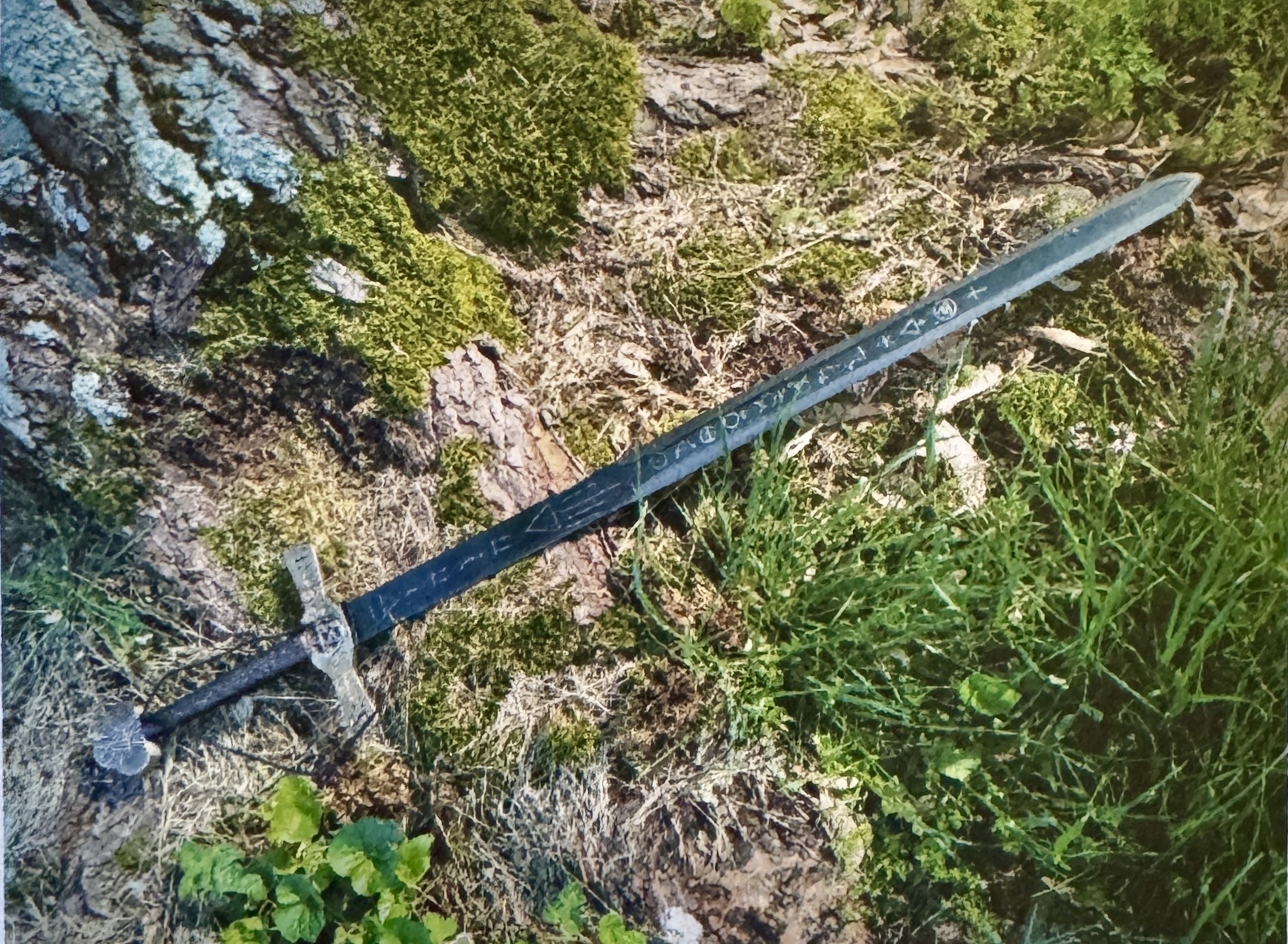
A ritual sword created by the author
Given the almost sacerdotal office of the blacksmith, the author likens the forge to a place where rituals are performed, with the blacksmith as officiant. In such a setting the anvil becomes the altar, the center of focus for all the work of transformation.
Finally, he provides a suggested recreation of a ritual surrounding the forging of a blade using elements of medieval and theurgical ritual and prayer. Above all, this reminds us that the sword has been an integral part of the magician’s toolkit for centuries, and that so produce a sword using an automated process or robotic assembly line creates an object as devoid of life as the mass-production of pills in a factory when compared to the loving and prayerful creation of an elixir in former times.
This book is short, but full of interesting facts, and will alter your view of the art of the blacksmith.

One Comment