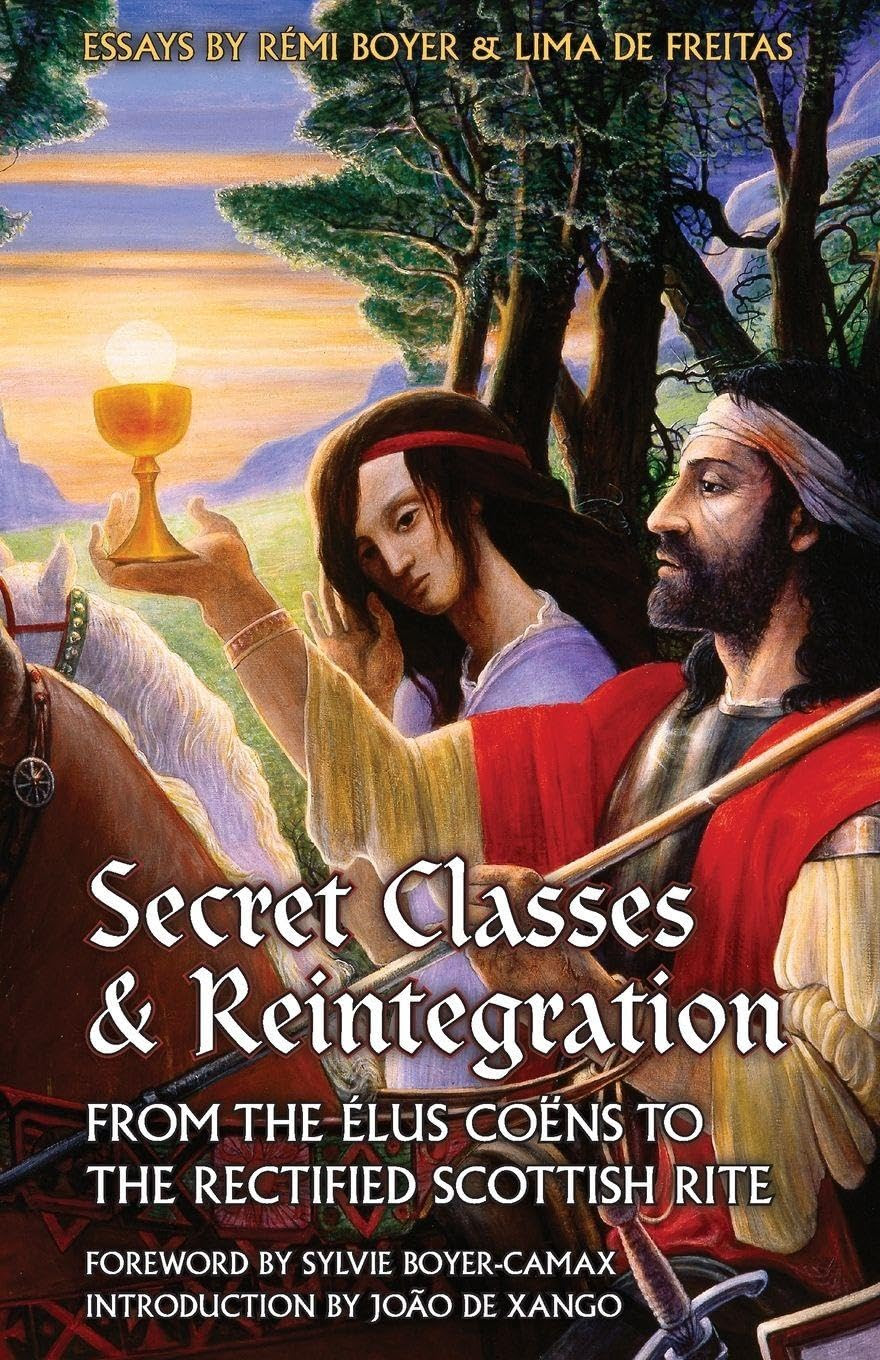
This book is essential reading for those with an interest in the Elus Cohen of Pasqually and the Scottish Rectified Rite of Willermoz. The book is comprised of three essays and illustrated by images drawn by Lima de Freitas.
The first essay, by Boyer, discusses the recreation of the Cohen rituals by Robert Amadou and himself, and provides a number of fascinating insights into the nature of that work, the challenges faced in trying to follow such a monastic regime in modern times, and the relative successes he had.
For me it was a revelation. I was glad to see how these luminaries had attempted to make the system work despite its shortcomings, and the relative lack of original materials. I was also hardened to see some of my own ideas confirmed. For example, realizing it was impractical for a practitioner to recite four Offices every day and two masses a week, I suggested it would make more sense to have a postulant recite the Lord’s Prayer and Creed, along with two psalms (De Profundis and another linked to the day) each morning and evening – something relatively easy to do on a daily commute – and to get into the habit of this discipline. I also felt it necessary to give the aspirant a relatively simple operation to perform regularly, such as the Néomenies, rather than full exorcisms after conferring the complete ordination. That way, if the postulant decided the path wasn’t for them, they wouldn’t be stuck with all the negative consequences of ceasing the work while still surrounded by inimitable forces.
The second, also by Boyer, considers the symbolism of the Scottish Master of Saint Andrew Degree, and concludes that the teachings of Reintegration are most eloquently described in this pivot degree. He also drew attention to the fact that Willermoz stated all Brethren – not just the CBCS – were eligible for the Profession if “found worthy”, and indicated a belief that Willermoz both continued to practice the theurgy of the Elus Cohen long after the Order had become defunct, and also sought like-minded people to work with him.
Again I was delighted to obtain so many new insights into a ritual I had observed and participated in for nearly 30 years. I, too, had reached the conclusion, shared by a number of French colleagues, that the members of the Profès has continued to perform Cohen operations, and that their work was far more detailed than simply reading a lecture occasionally. Boyer’s insights into be symbolism both of this Degree and that of the first three Degrees, was profound and inspiring. I parituclalry liked the way in which he patiently explained the appearance of Pasqually’s numerical system throughout the Order.
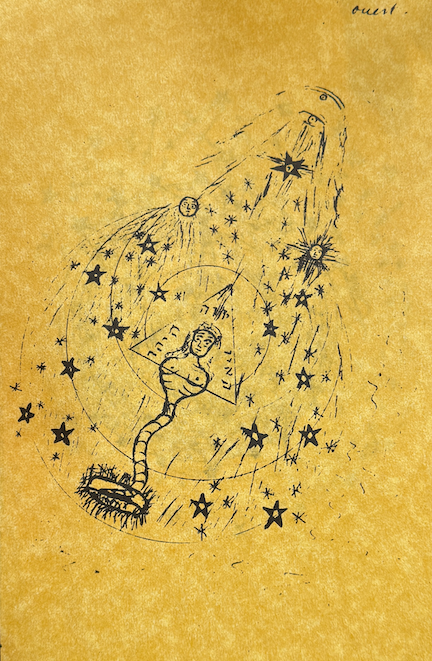
Angéliques, Volume 1
The final essay, the outlier by Lima de Freitas, discusses the symmetry of numbers and shapes as symbols of divinity, and particularly focuses on the role of fire in all esoteric traditions, just as the central axis of fire features so predominantly in Pasqually’s Treatise. The essayist takes times to explore the difficult interpretation of the number 5, which is both good and evil from different standpoints, reflecting both the spirit in man and the imperfect triangle; and exploring the cryptic reference to ‘515’ in Dante’s Inferno.
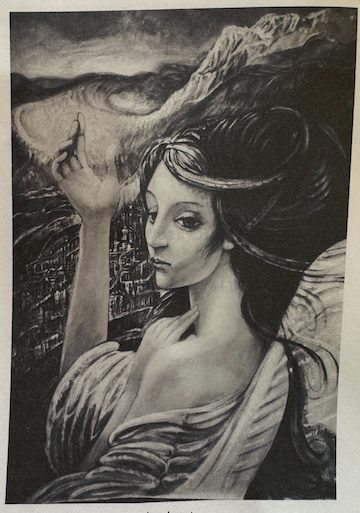
Lima de Freitas: Angel Announcing the 515 to the City
This was a fascinating read, and I give credit to Michael Sanborn, the translator, for rendering very complex ideas in French into a very readable book. This topic has bene an earea of study for many years for me, and I was delighted how much I learned from this book.
