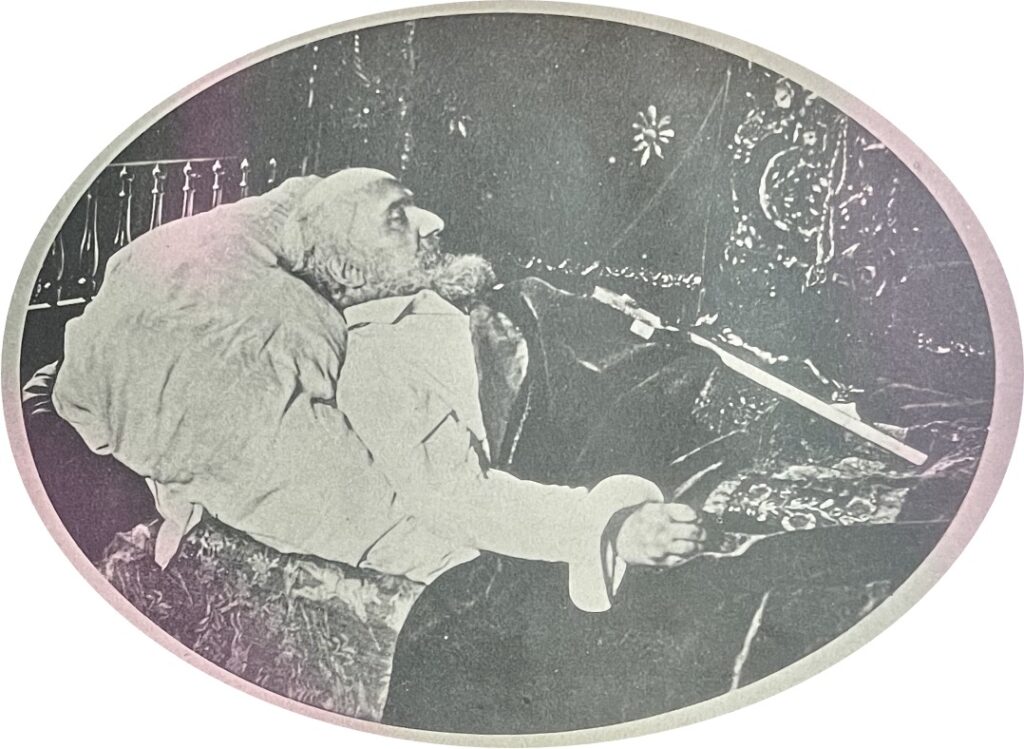
Most people know that Éliphas Lévi (or Alphonse Louis Constant) was a clergyman who wrote a large number of very influential books on esoteric topics, and that he was a major influence on the occult revival of the 19th Century, particularly in England and France. However, far fewer people are aware that he was a passionate revolutionary who flirted with Socialism – and was indeed jailed for some inflammatory pamphlets – before coming to the conclusion that the working class of the time couldn’t be trusted to run themselves in an altruistic manner for the benefit of society as a whole, and therefore preferred a synarchical arrangement whereby sages and priests would be in charge. Or that he had a very conflicted relationship both with the religious establishment and with his own adherence to some of their demands – particularly celibacy (he was not only married; he had at least one son out of wedlock!).
However, Lévi was also a poet, as were most lettered men of his age. His subjects spanned a wide range as befitting someone of his education, and he wrote about religion, the classical philosophers, mythology, history, sentiment, love, ideology, the esoteric and revolution, all of which reflect various aspects of his life and his changing and maturing interests. And as they say that poetry is the window to the soul, so his poetry offers us a rare glimpse into the soul of the man who so many of us simply know as the author of some fascinating books.
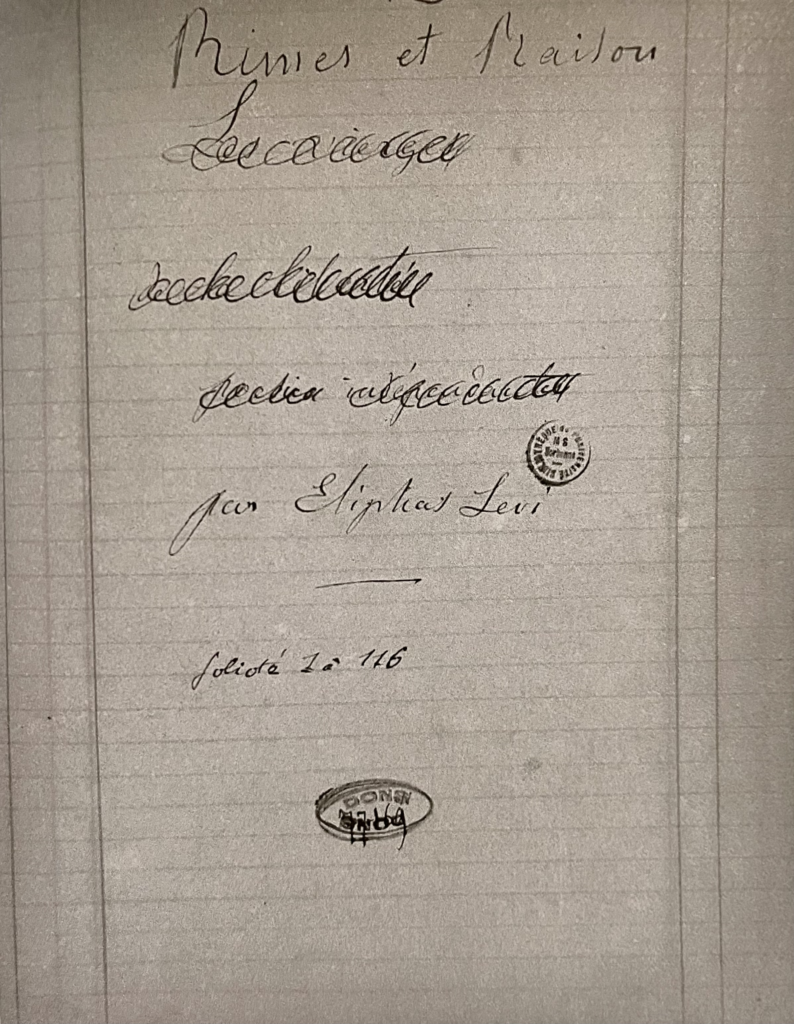
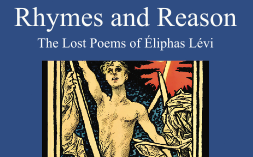
We are indebted indeed to Stewart Clelland for discovering this trove of ‘lost’ poems in the library of the Sorbonne, for translating them and bringing them to the English-speaking world (though the book also contains the poems in French. This is useful not only to allow francophones to have access to them as well, but also to help those with a grip of French to appreciate the poetic techniques which he brought into play). Stewart Clelland may be known to you for his collaborative work with other masonic and esoteric scholars in publishing a translation of the so-called Green Book, a compendium of theurgical techniques used by Martinez de Pasqually in his Order the Élus Cohen compiled from the notes of his disciples, in particular Louis-Claude de Saint-Martin and Prunelle de Lière, as well as the recently-published The Master’s Voice: The Rituals & Letters of Martines de Pasqually (both available from Lewis Masonic). I am particularly honored that Stewart would choose Rose Circle Publications to be the publisher of these rare poems.
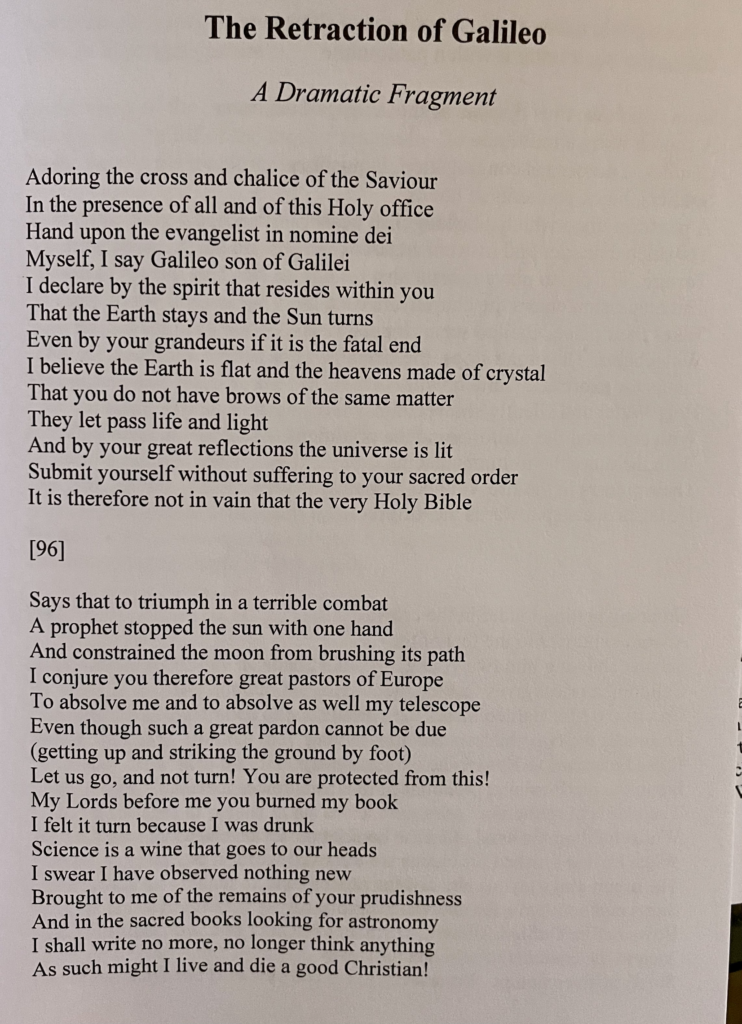
As well as the excellent translations and an explanatory Preface, we are lucky that Mathieu G. Ravignat, another noted scholar on the esoteric life of 18th and 19th Century France, and another author on the Rituals of the Élus Cohen and the Gnostic Church, has written an extensive and comprehensive Introduction on the life and influences of Lévi to put the poems in context. I have also contributed a short Foreword which attempts to focus a little more on Lévi’s poetic style, and my reaction to reading the poems.
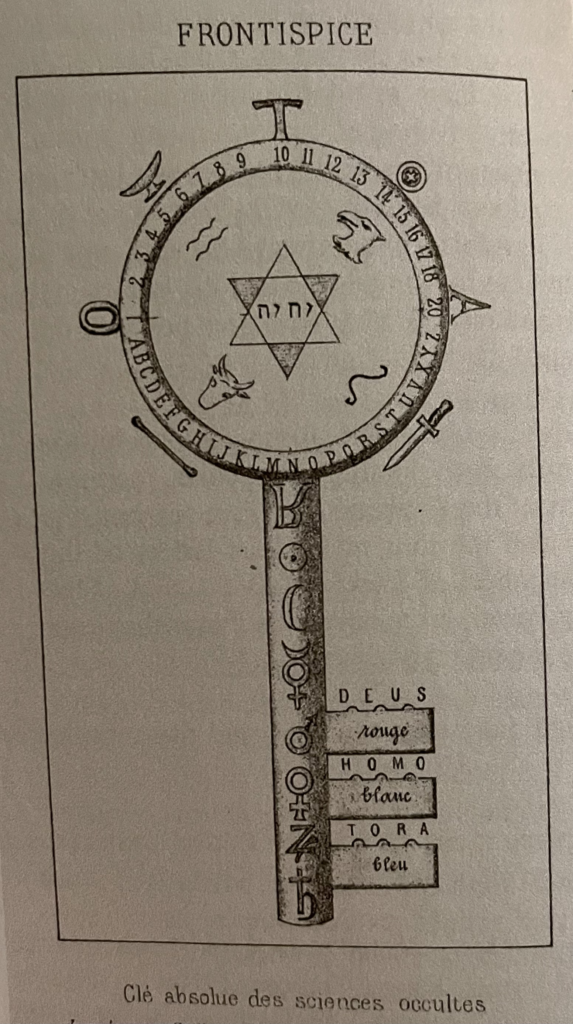
It is always heartening to see another book appear in English which translates an important esoteric book from the wellspring of the French occult revival. And it is particularly satisfying when a Scotsman beats the French authors to publishing a hitherto unknown volume of such historical importance!

What a great find Piers, keep up the amazing work you do.
Happy New Year