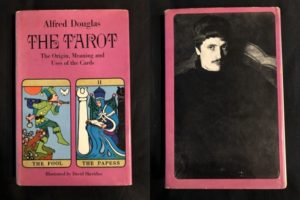
Back in 1972, when I was 15 (I’ll give you a little time to get your calculators out!) I purchased my first and second Tarot decks. I was at boarding school in England, so I had to keep my interested somewhat hidden. My first deck was one of the only kinds available at that time, the Rider Waite Deck. I was fascinated by its imagery and beauty, but I must admit I found it rather daunting. Then the book by Alfred Douglas, The Tarot, came out, and with it the Sheridan Douglas deck of Tarot cards. Douglas had recently written a successful book on the I Ching, and now he turned his attention from the Eastern Traditions to the Western ones. Perhaps it might give you an idea how unusual the subject was in those days to remember the book was called ‘The Tarot’, which is about as fundamental as you can get!
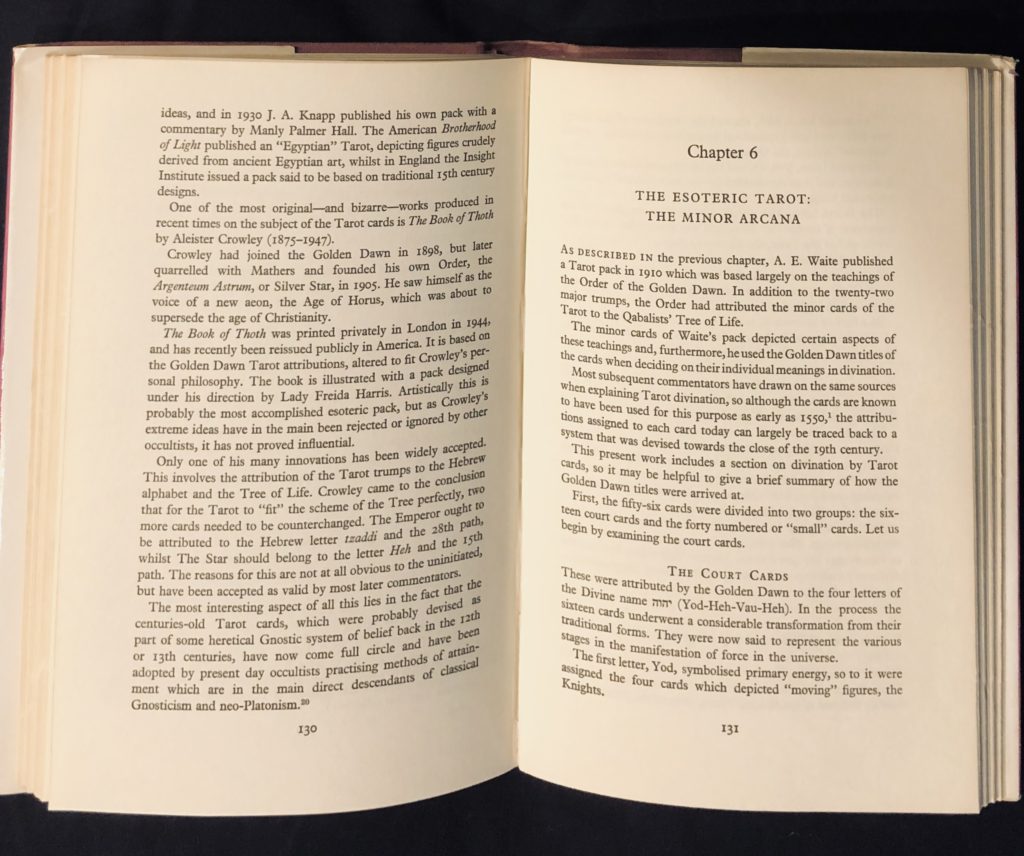
What was particularly fascinating for a young teenager about the books was the fact that, rather than simply discuss how to do a reading, which was the extent of most articles on the subject at the time, it went into its history, its symbolism, its esotericism and its links with the Golden Dawn and Kabbalah, and even discussed the practice of meditating on the cards. The evocative names of Israel Regardie, Eliphas Levi, Aleister Crowley, William Wyn Westcott, Arthur Edward Waite, Oswald Wirth and others were mentioned, many of whom I was hearing for the first time.
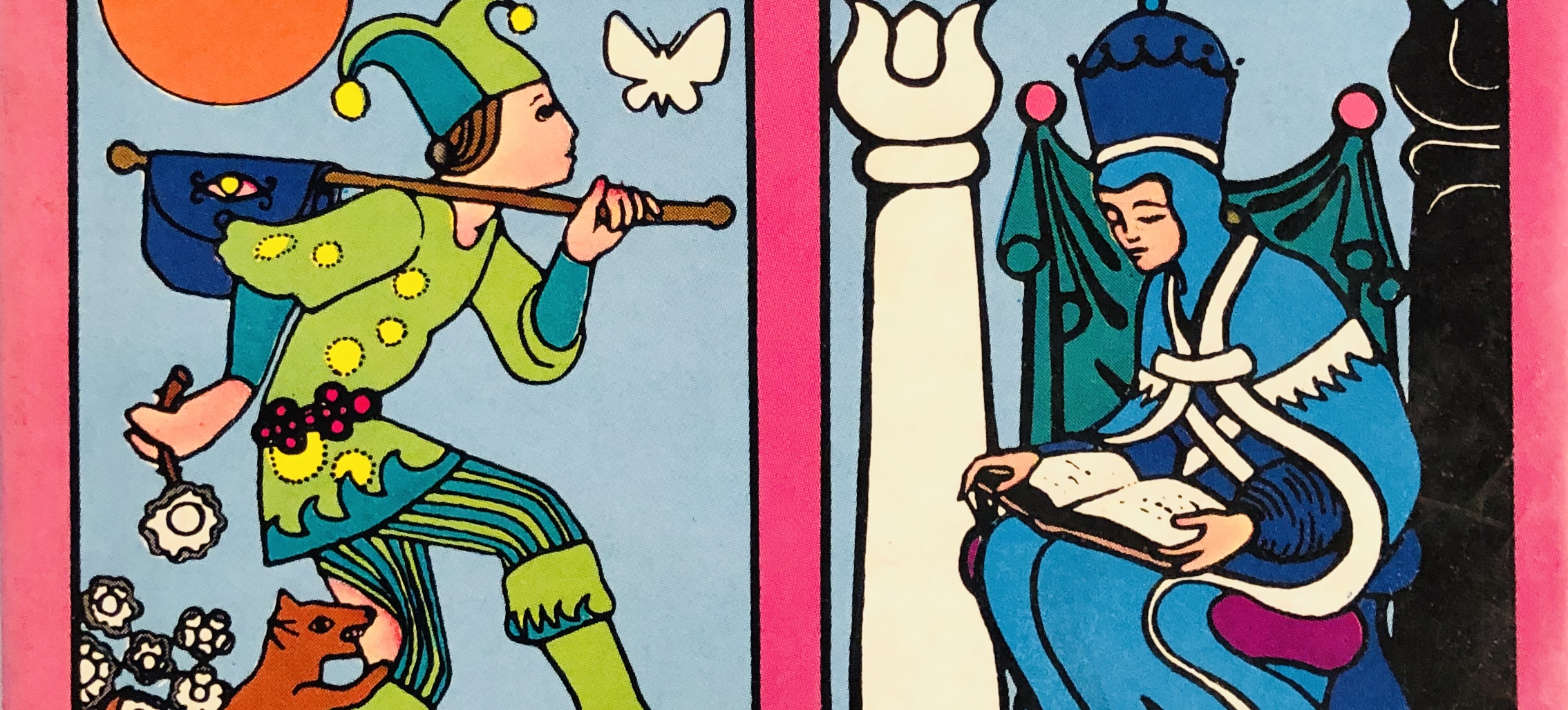
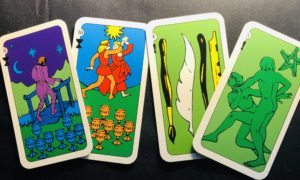
But if the book was groundbreaking for its time and opened up the Pandora’s box which was to become my prevailing area of interest for the next 47 years of my life, the Tarot Deck designed by David Sheridan to accompany the book (rather as Pamela Colman-Smith illustrated the deck for Waite), was exactly what I had been looking for. Perhaps the cards look a little dated now, with their simplistic and vivid images, reminiscent perhaps of The Beatles’ cartoon Yellow Submarine. But for me, and clearly for the many people who eagerly purchased both book and deck, it was the answer to a prayer: a simple deck with straightforward instructions, which could be put to use immediately, while the book introduced us to its background and allowed us to develop and hone our skills as we learned about the deeper meanings of the cards and the more profound uses which might be made of them. But since the Minor Arcana cards actually depicted their meaning so straightforwardly it was easy to do a reading and practice on friends very quickly. It was definitely the first deck to lower the barrier to entry in this field, and opened up an interesting the Tarot perhaps more than any other book or deck previously had.
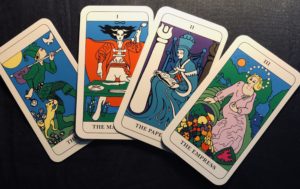
I was lucky to hang onto my book, since I rarely let it out of my sight in those days, and perhaps because if this I still have my first edition copy, in quite good shape despite all the use I made of it over the years. But sadly my original deck went ‘missing’ when my parents moved while I was at University (along with other ‘questionable non-Christian stuff’, and my extensive Chemistry and Geology collections…but that’s another story). I was resigned never to hold a set of those seminal cards my hands again – until the Sheridan family decided to release a new edition a few years ago. My happiness was complete, and I now share the story with you.

Great post, Piers! And I had a wee chuckle at the purging of the “questionable non-Christian stuff,” as I had a very similar experience at around the same age 😇